



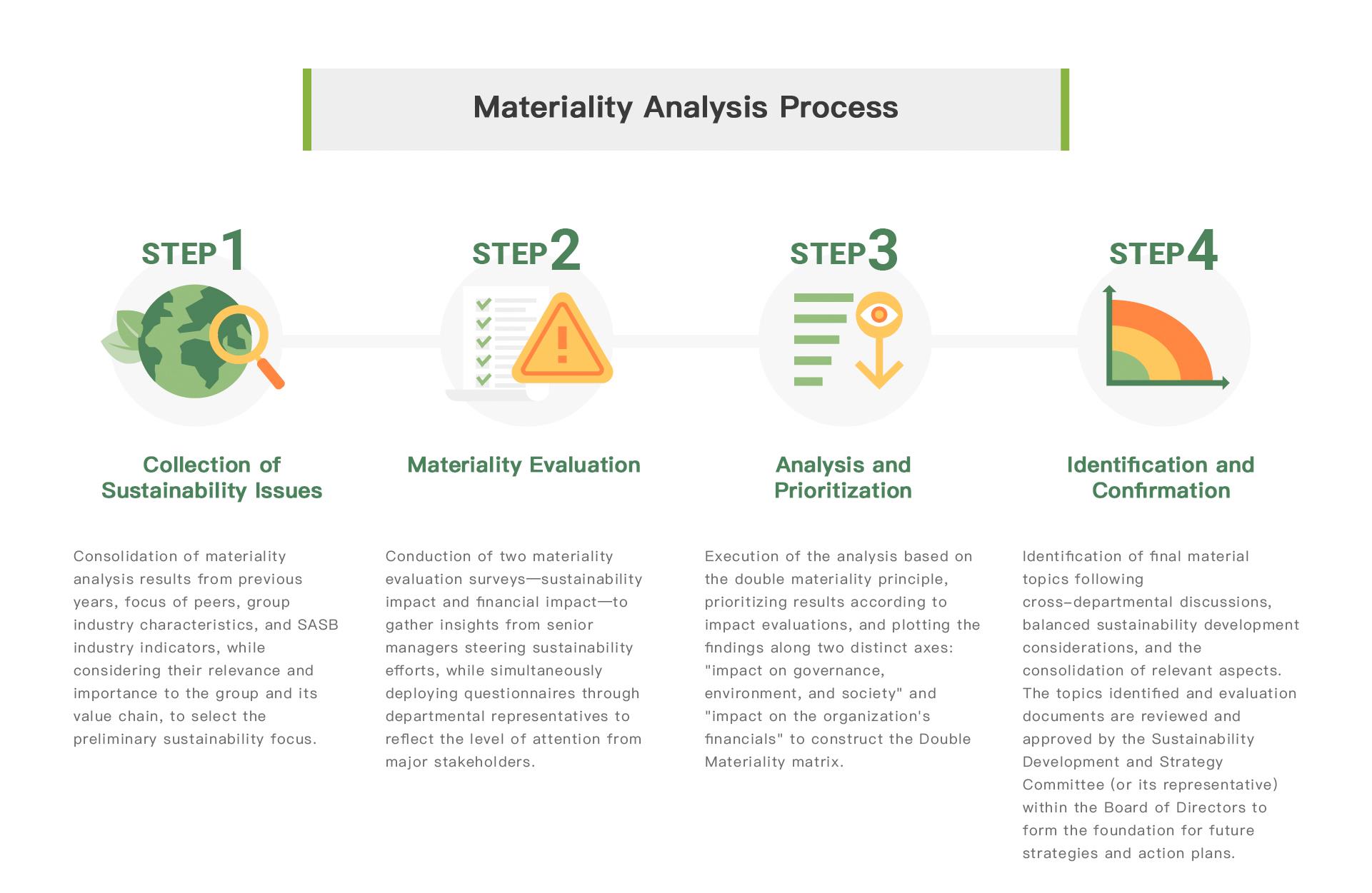
Materiality Analysis Process
To ensure a comprehensive knowledge of and response to the challenges and opportunities related to sustainability/ESG, we have established a complete materiality analysis process, and invited internal and external stakeholders to review and discuss together. Thus, we hope that all stakeholders who care for the telecom industry and the advancement towards sustainable development of Chunghwa Telecom can focus more on ESG issues that Chunghwa Telecom is actively involved in and has its industrial influence on. This also helps Chunghwa Telecom to focus more on deepening the content of its actions and improving the quality of information disclosure.
- We conduct or review materiality analysis annually to ensure that our sustainability focus aligns with current business operations and stakeholder expectations. The annual results are reviewed and approved by the Sustainable Development and Strategy Committee or its designated representatives(Chairman).
- Our materiality analysis is conducted in accordance with ‘Double Materiality’ principle, guiding our strategic management in alignment with the company’s sustainability goals and future business directions.
- Chunghwa Telecom's materiality assessment process is externally verified by an independent third party.
Materiality Assessment – External Stakeholder Engagement
Chunghwa Telecom's external stakeholders comprise various groups: customers, suppliers, competent authorities, local communities, NGOs/NPOs, investors, etc. Beyond having dedicated departments responsible for engaging with each group, we have established diverse communication and engagement platforms. Adopting a transparent and open attitude, we invite these stakeholders to participate in discussions regarding sustainability topics. By listening to their valuable feedback, we broaden our perspective and deepen our understanding of sustainability issues and their associated impacts. In the process of materiality assessment, questionnaires are deployed to collect the level of attention paid by various external stakeholder categories toward each sustainability topic. Our engagement platforms for external stakeholders include:
- Stakeholder forums: open platform for dialogue and exchange to facilitate the understanding and discussion of all stakeholders on ESG issues through organizing and participating in forums/seminars themed with ESG.
- Interviews and questionnaires: The opinions and suggestions of ESG issues from external stakeholders are collected via interviews and questionnaires at various activities/conferences to more comprehensively assess impacts of the ESG issues.
- Community engagement: External stakeholders are invited via social media to partake and put forward their judgements and opinions on ESG topics to broaden the scope and depth on the issues.
- Communication and complaint channels: Various communication platforms and channels, are made available, including online forms, mailbox, and telephone, allowing external stakeholders to directly raise questions, suggestions, or complaints to the Company. The Company responds to and addresses all the received feedback in a timely manner to ensure that the voices of external stakeholders are fully heard, acknowledged, and responded.
Double Materiality Matrix
We conduct a double materiality analysis to construct our Double Materiality matrix, assessing the likelihood, severity, and remediability of positive and negative impacts across dual dimensions: the financial materiality of sustainability risks and opportunities on our operations, and the impact materiality of our corporate activities on governance, environment, and society.
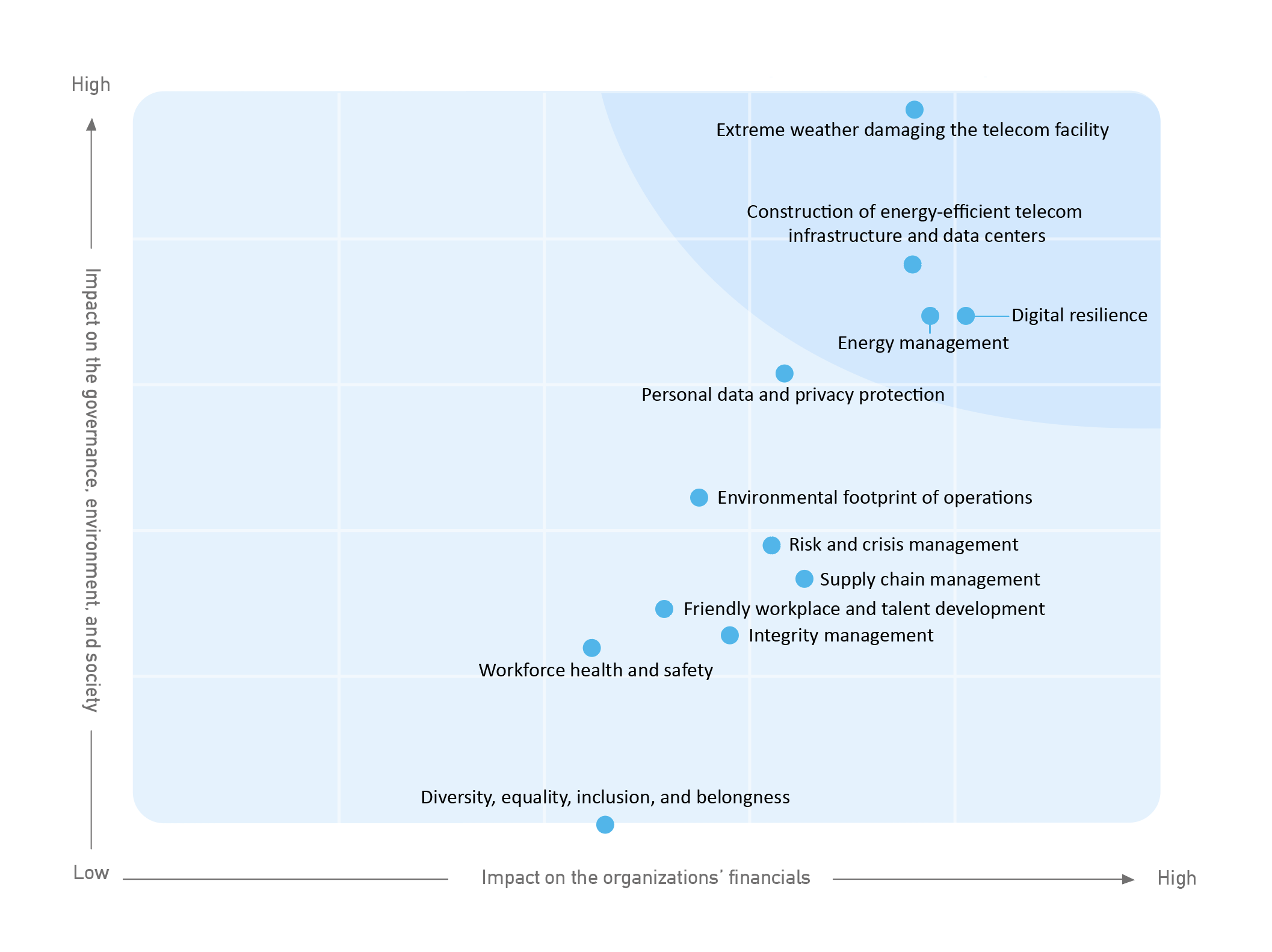
Sustainability executives and representatives of the governing and responsible authorities discussed the analysis and prioritization results. Considering the balanced development of each sustainability aspect, they consolidated and focused the scope (detailed in the 2025 Sustainability (ESG) Report), ultimately identifying the following 6 material topics:
| 2025 Material Topics | Reduction of Carbon Emissions | Supply Chain Management |
|---|---|---|
| Digital Resilience | Friendly Workplace and Talent Development | |
| Personal Data and Privacy Protection | Integrity Management |